|
SeaDaqMechanical Construction |
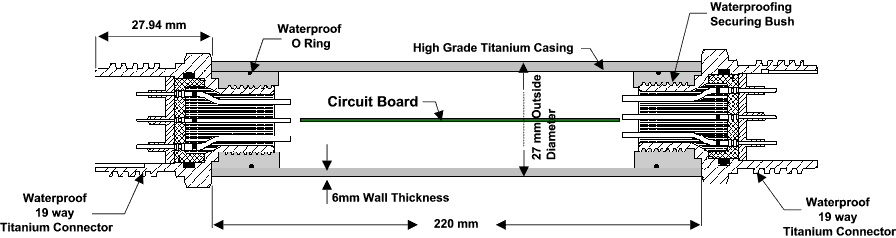
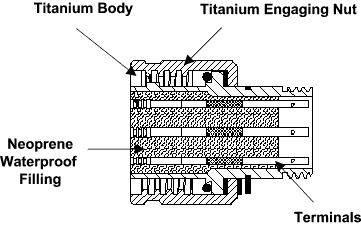
ConstructionThe image below shows the physical construction of the SeaDaq Data Acquisition & Control system. This version of the Keynes Controls ATM instrumentation is ideally suited for harsh conditions and underwater applications. Figure 1 shows the overall instrument construction. The case has been carefully designed to be corrosion and waterproof when deployed within Sea water and most other harsh environments. The unit can deployed directly underwater without any requirement for additional waterproofing or pressurisation enclosures. The case allows the unit to have an operational working depth of 5 Km allowing the instrument to be deployed directly into nearly any under water application. The case external materials are all manufactured from Grade 5 Titanium and so do not form an Electrochemical potential between any component parts, therefore reducing to an absolute minimum any chance of corrosion due to interaction with sea water over long periods of time. Internal Systems ProtectionIn order to ensure the integral waterproof capabilities of the SeaDaq system the internal section of the instrument is filled with a silicon rubber coating. The coating is used to prevent any condensation or water ingress that might occur from effecting the electronics or pins on the inside of the connector. Waterproof 19 way socketsThe SeaDaq utilises 2 off 19 way waterproof socket to provide signal connections to the instrument. The pins on the sockets are made of copper and sealed into the housings of the plugs using mating female copper terminators. The terminators are waterproof sealed into the plug using a non-corrosive Neoprene plastic. The pins on the socket form a water tight seal to the female terminators so long as the plug and socket are joined together dry environment. The 19 way sockets are secured into the instrument housing using the securing bushes. The sockets screw into the bushes and form a water tight seal to the edge of the case. The securing bushes fit inside each end of the instrument enclosure and using a series of O rings form an integral waterproof seal. The inside of the instrument chamber is water-tight and the electronics operate in a dry environment. Component Parts
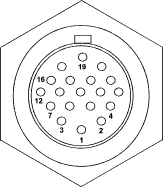
Connector Pin-outsTable 1 shows the pin-outs for connector 1 which is used to connect the analogue inputs to the instrument. Table 2 shows the power and network connections.
The above dimensions and electrical details are accurate at the time of publishing. Keynes Controls reserves the right to make changes without notification. |
 |