Geotechnical Measurement Solutions

Measurement Axis Options for 1 - 3 axis
Frequency response 0 to (-3dB 18Hz)
High shock durability (20000 g)
Range 0.1 - 2.0 m
Operating Voltage 12 V DC
Storage temperature - 55°C to +125°C
Operating temperature - 40°C to +80°C
0.001° resolution (10 Hz BW, analog output)
12 Digital Port
Output Engineering Units
Excellent stability over temperature and time
3rd Party Software Interface Support
Frequency response 0 to (-
High shock durability (20000 g)
Range 0.1 -
Operating Voltage 12 V DC
Storage temperature -
Operating temperature -
0.001° resolution (10 Hz BW, analog output)
RoHS compliant
Voltage Output ± 5V, 0 - 2.5 V DC
Options for SDI-Output Engineering Units
Excellent stability over temperature and time
3rd Party Software Interface Support
Introduction
The following data sheet summarises the technical specification for the Model M5210-X range of motion sensors. The M5210-X motion sensor is a solid state low noise device capable of monitoring low frequency movements on fixed structures for both static and dynamic applications. The low thermal drift enables the unit to report static drift over long periods of time. The instrument uses low noise accelerometers to make physical
Vector Magnitude - Measurement
The 5210-X range of sensors offers options for 1, 2 and 3 degree of freedom and offers output signals simultaneously to a data acquisition system. When used with the Keynes Control NetPod series instruments true vector magnitude displacement results can be obtained.
The NetPod range of data acquisition systems offer full synchronised measurements with interface cards containing signal conditioning, anti-ailias filters, digital anti-ailias and lightening protection in a single unit. There are no phase delay through the filters or sampling delay caused by multiplexers when undertaking a measurement.
As the displacement of a body/structure is made in perpendicular axis simultaneously then true vector magnitude and direction can be determined using simple vector
Model 52102





± 3 Deg
Axis of Motion
Fig 1
Operations
The motion sensor provides an output signal proportional to acceleration in the specified directions of motion and this is supplied as an analogue output for direct connection to a data acquisition system or via an SDI-12 port for connection to a logger unit.
The sensor outputs have been optimised to connect directly on to a Keynes Controls data acquisition system using the standard voltage input channels or onto an SDI-12 based logger unit for remote recording operations. After the data acquisition system has made a reading the new data values are passed to the integration software via the standard instrument driver for processing.
The Integration software filters the input signals to remove any offset and noise below 0.05 Hz (Constant offset) and above 5 Hz. The instrument uses over-sampling and filtering to remove out of band noise. The acceleration signal output from the sensors are then integrated to convert them first to velocity and then again to displacement. At each stage of the processing the constant of integration is remove by the filtering action to prevent the resultant



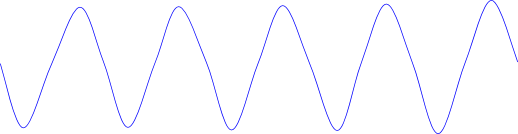



Care should be taken to ensure that the input signals are free from noise and that all Earth terminations are undertaken correctly. Any noise below 1 Hz during the integration process will have magnifying effect upon the whole result. Note.










Host Data Analysis PC



NetPod 400


M52102

Local Area Network
Wind Speed
Tilt Sensor
Tilt Sensor
Tilt Sensor
Tilt Sensor

Typical Application
The majority of the energy implied into an offshore structure is wave motion and to a lesser amount the wind. For this reason keynes set the high pass filter at 0.05 Hz as this is just the wave frequency and 5 Hz as this is above any wind forcing effect. The motion of structure caused by wave motion can be clearly observed with the M52102 sensor.